
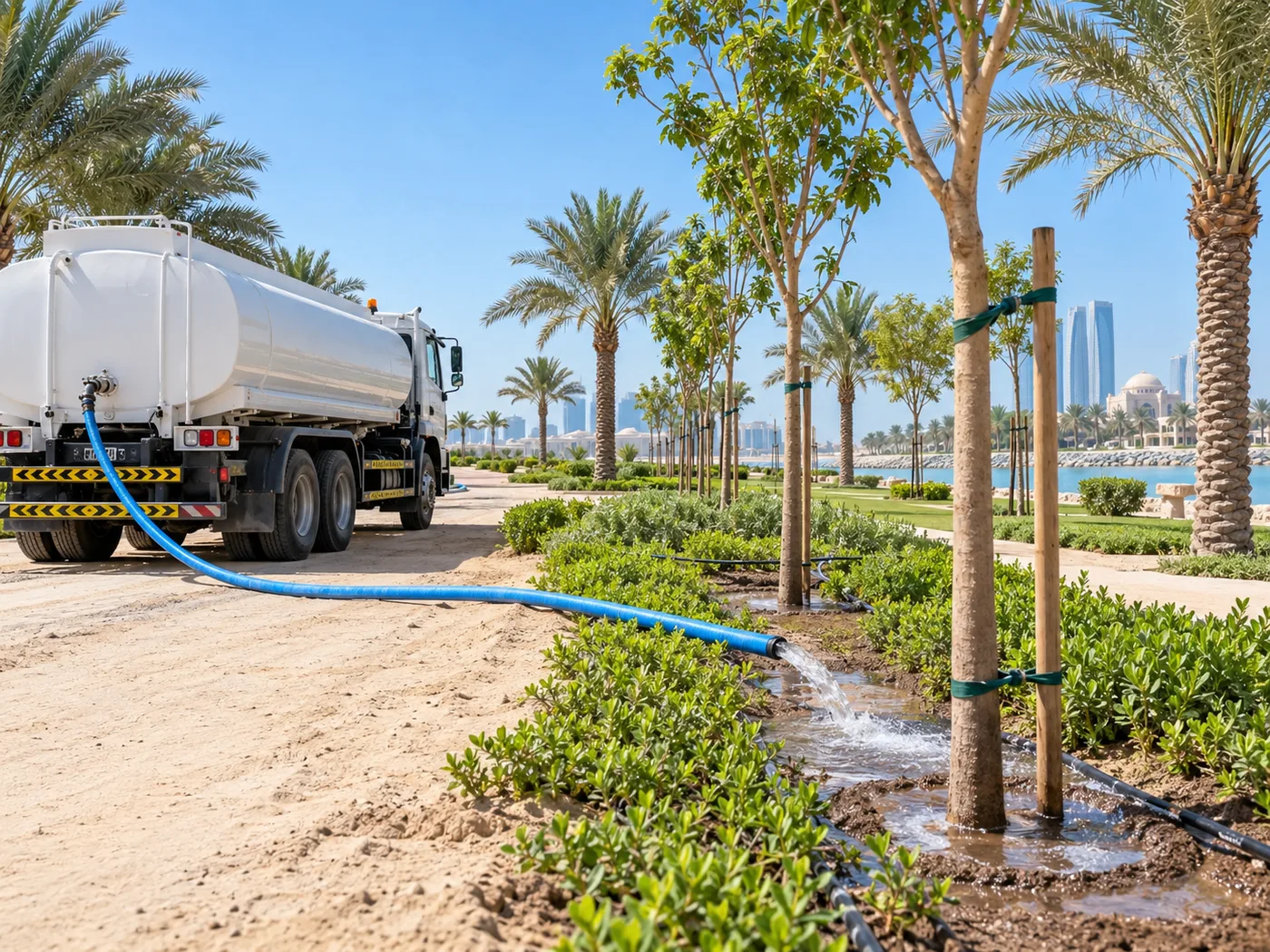
An irrigation water plan works best when it begins with a drawing of the place, not a guess at the number of tanker trips. Mark the planted zones, temporary work areas, filling points and any storage already on site. Note which areas are newly planted and which are established. The landscape contractor or irrigation designer should set the water requirement; a transport provider can then discuss how to move the specified supply to the right handover point.
Be explicit about the required water source. Some projects specify treated sewage effluent, often called TSE, while others call for a different irrigation supply. That choice belongs in the project or facility specification. It should not be replaced just because another source is easier to obtain. Tell the provider whether the request is for scheduled deliveries, a one-off fill or support while permanent irrigation infrastructure is unavailable.
Storage changes the delivery pattern. A tank with usable spare capacity may allow a different schedule from a site that uses water immediately on arrival. Record tank size, current level, connection position and who monitors consumption. If more than one zone draws from the same storage, describe the peak periods when those zones overlap. A simple log of daily use can make later delivery requests much more accurate than a fixed estimate carried forward without review.
Access can change from week to week on a landscape project. New paving, trenches, planting beds and occupied public paths may alter the safe route for a tanker. Share the current gate and stopping point, any access restrictions and the person who will direct the vehicle. If the transfer point is far from where a vehicle can stop, mention the distance and elevation so the equipment arrangement can be assessed before the visit.
Review the plan as planting progresses. Ask the site team to flag a newly connected irrigation line, a temporary tank move or a change in work hours. Agree how to report shortfalls and how much notice is needed for the next request. The aim is to keep water available for the landscape while using a source and transport arrangement appropriate to the project, not to lock a developing site into an inflexible timetable.