
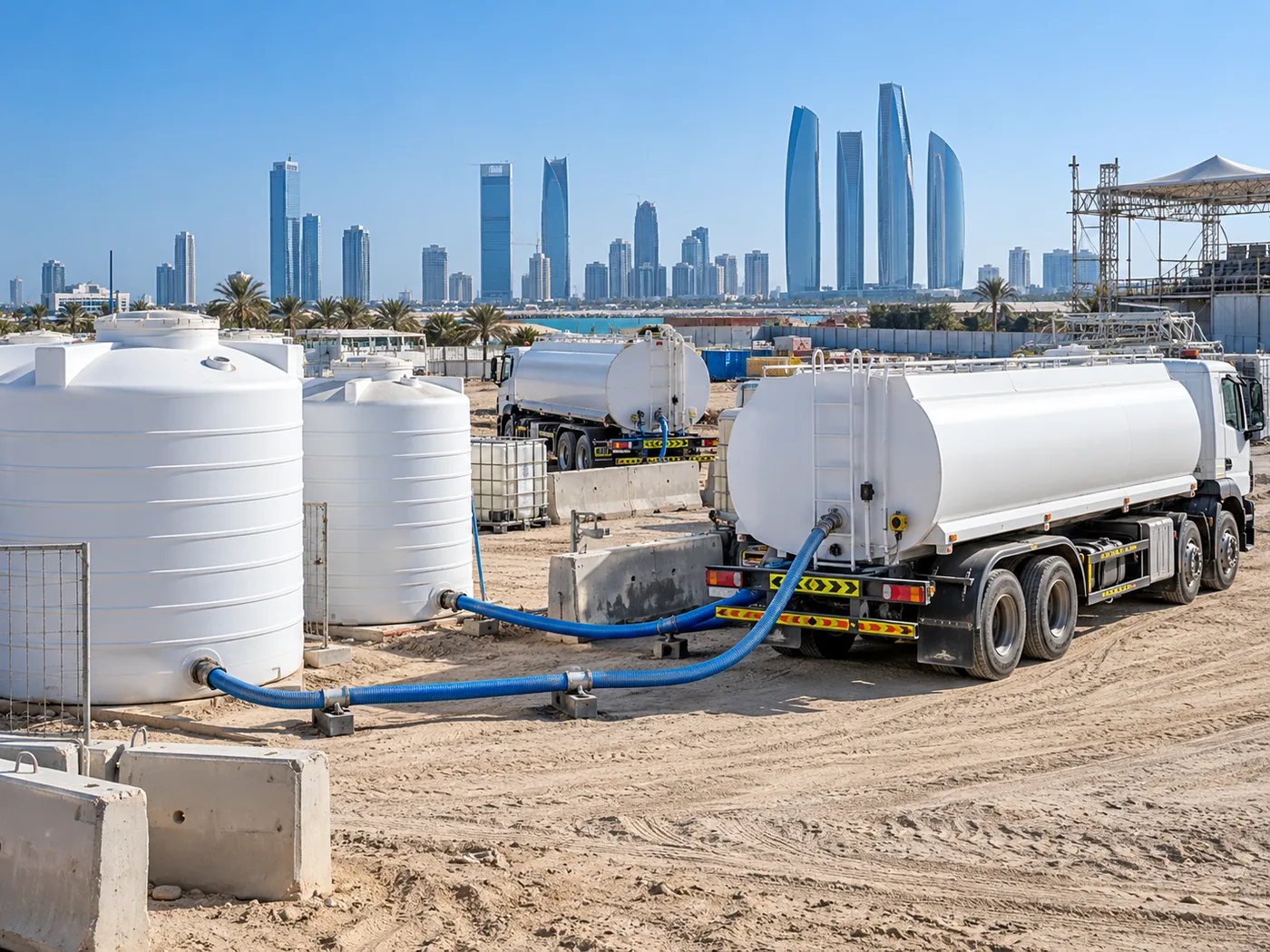
A site that needs water may need delivery, mobile distribution, storage or a combination of the three. Those are different problems, so begin by describing where the water is used and how frequently it must move. A tanker can bring a load to a receiving point. A bowser may be considered when water must be moved around a working area. A static tank may be useful when the site needs a fixed reserve between deliveries. The right option depends on the job, not the equipment name alone.
Sketch the flow from arrival to use. How will the water enter the site, where could a vehicle stop, and where is the final point of use? If the site has several work fronts, note their locations and whether access changes during the day. If a fixed tank is proposed, identify a suitable placement area and ask the site team to assess the base, clearances and any protection needed around it. Do not choose capacity until usable space and expected demand are understood.
Duration matters. A short activity may call for a different arrangement from a long project with regular refills. Estimate daily or weekly consumption and identify who will check the remaining level. Include periods when the site is closed or when water use rises. If the water has a defined quality or source requirement, state it at the start; equipment and handling must suit that category. Water intended for drinking needs its own clear specification and appropriate receiving arrangement.
The hire brief should also cover responsibilities. Who provides the fill water, who connects the equipment, who checks the tank during use, and who arranges cleaning or return? Ask how any damage, access change or extension of the hire period is handled. If a bowser must move within the site, note internal traffic rules and the person authorised to direct it. These details are more useful than requesting “one tank” without context.
Send the provider the location, purpose, water category, estimated consumption, possible placement area, start date and expected duration. A photo or simple plan of the intended position helps. The response can then address whether tanker delivery, a bowser, static storage or a combined arrangement is practical for your site.